Meet the 2022 Leadership Honorees
Estos premios reconocen a los líderes que han tenido un impacto significativo en la mejora de los resultados para los niños y las familias y en la construcción de Comunidades de Esperanza en todo Estados Unidos.
Seleccione la foto a continuación para obtener más información sobre los homenajeados de este año.




Jonathan Nez
Jonathan Nez has been President of the Navajo Nation since 2019. Born in Tuba City, Arizona, and raised in Shonto, Arizona, President Nez is now married to Phefelia Nez and together they have two sons, Alexander and Christopher. President Nez holds a bachelor’s degree in Political Science, a Master’s in Public Administration, and, with First Lady Nez, also received an honorary doctorate degree from Northern Arizona University. President Nez began his public service as Vice President of Shonto Chapter. He was elected to three terms as a member of the Navajo Nation Council and two terms on the Navajo County Board of Supervisors. In 2015 he was elected Vice President of the Navajo Nation. President Nez led an aggressive response to the COVID-19 pandemic, resulting in the Navajo people having one of the highest vaccination rates in the world. He also acquired funding for critical infrastructure developments that will improve the well-being of the Navajo people for generations. President Nez is a longtime advocate of healthy living, strongly encouraging the Navajo people to practice the teaching known as T’áá hwó’ajít’éego, or self-reliance and self-determination. His priorities include mental and behavioral health treatment, and assistance for communities as they recover from the pandemic’s far-reaching impacts.

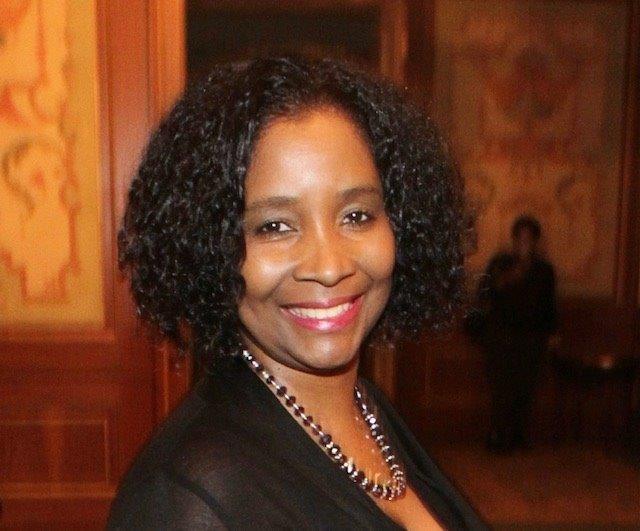
Dr. Raquel Hatter
Dr. Raquel Hatter is managing director of the Human Services Program at The Kresge Foundation, which seeks to advance social and economic mobility with a racial equity lens. Prior to joining Kresge, she served as commissioner of the Tennessee Department of Human Services, where she worked to improve outcomes for families through programs such as Temporary Assistance for Needy Families, Supplemental Nutrition Assistance Program (SNAP) and vocational rehabilitation. Early in her career, she worked as an in-home outreach worker and frontline practitioner, providing support to families in crisis. Dr. Hatter was the first Black CEO for both Whaley Children’s Center in Flint, Michigan, and Family and Children’s Service in Nashville, Tennessee. She has served as an adjunct instructor at the community college and graduate level and has worked with indigenous communities in the Northern Territory in Australia. To inform her work, Dr. Hatter draws on her lived experiences. She graduated from the Head Start Preschool Program as a young child, and was a student-parent during her undergraduate and graduate studies, receiving both SNAP and childcare assistance to help her get by. In her words, “I know what it is to struggle, and I know what it is to struggle less.”

Aysha E. Schomburg
Aysha E. Schomburg joined the Biden Administration in March 2021 as the Associate Commissioner of the U.S. Children’s Bureau. In this role, she advises the Administration on matters related to child welfare, including child abuse and neglect, child protective services, family preservation and support, adoption, foster care and independent living. The Children’s Bureau recommends legislative and budgetary proposals, operational planning system objectives and initiatives, and projects and issue areas for evaluation, research and demonstration activities. Previously, Schomburg served as the Senior Administrator for Program Oversight for New York City’s Administration for Children’s Services (ACS). There she worked with agency leaders to develop and implement ACS’ operational infrastructure. During the COVID-19 pandemic, she collaborated with New York City’s Department of Education and Department of Homeless Services to create guidance for frontline staff. She also provided recommendations to ACS’s Office of Equity Strategies regarding addressing inequities and racism in child welfare. In October, the Aspen Institute named her a 2021 Ascend Fellow, joining a network of visionary leaders who are transforming the trajectory of children and families across the country. Schomburg received her B.A. from the University of Virginia, her M.A. from New York University and her J.D. from New York Law School.

Vannessa Dorantes, LMSW
Vannessa Dorantes was appointed commissioner of the Connecticut Department of Children and Families (DCF) in 2019, the first African American to serve in that role for the state of Connecticut. As DCF commissioner, Dorantes cochairs Connecticut’s Alcohol & Drug Policy Council and the Governor’s Council on Women & Girls. She has worked to build communication and collaboration across stakeholder groups, and her approach with members of Connecticut’s legislature has helped ensure transparency on policy and budget initiatives. In 30 years with DCF, Dorantes has held nearly every social work position in the department. In 2014, she was appointed as a regional administrator overseeing 43 municipalities. From 2004 until her appointment as commissioner, she was adjunct faculty teaching several elective and core competency social work courses. On the Social Work Advisory Boards of two state universities during their re-accreditation, she has supervised countless undergraduate and graduate level interns. Dorantes is on the UCONN School of Social Work Board of Advocates, the APHSA Board of Directors, and was appointed to the state’s Commission on Racial Equity in Public Health. DCF’s racial justice work, performance management and continuous quality improvement continue to evolve under her administration, evidenced by Connecticut’s successful exit from a three-decades-long consent decree in 2022.
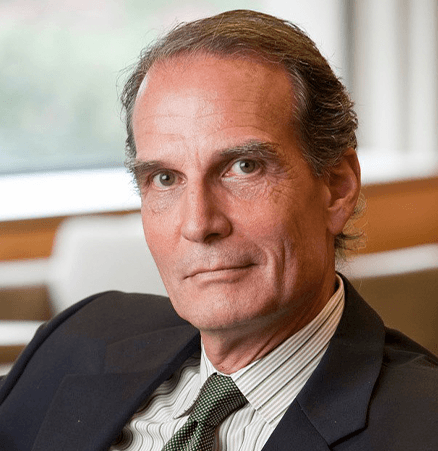
Lewis “Harry” Spence
Lewis “Harry” Spence served as commissioner for the Massachusetts Department of Social Services (now the Department of Children and Families) from 2001 to 2007, one of the many change agent roles he undertook in his career of public service. In addition to his work as commissioner, Spence served as a receiver for the Boston Housing Authority and the city of Chelsea; deputy chancellor of New York City’s education department; and as the first administrator of the Massachusetts Trial Court. As commissioner, his understanding of the complexity of collaborative partnerships between public schools and the state’s child-serving agencies enabled Spence to create connections that did not exist before. In his efforts to better serve children and families, he established a team-based model for service provision, support and accountability, and he created an Office of Continuous Quality Improvement. He established the agency’s first Child Welfare Institute to place professional development as a cornerstone of bringing best practices to everyday work. Spence understood the importance of listening to those with lived experience, and he created paths for birth parents and youth aging out of foster care to have a voice in policy and practice development. Spence died in 2021.