About ICWA
Enacted in 1978, the Indian Child Welfare Act (ICWA) is an important and comprehensive piece of federal legislation, designed to protect Indian children, families and tribes from child displacement. ICWA establishes minimum federal standards for the removal and displacement of Indian children from their homes or tribes and requires that, when removal is unavoidable, Indian children be placed in foster or adoptive homes that reflect Indian culture. State courts and agencies must actively identify Indian children to apply ICWA protections.
Improving compliance
Available research, though limited, indicates inconsistent and varying degrees of state compliance with ICWA requirements and sanctions. To address these potential shortcomings, the Department of the Interior has proposed new regulations that would ensure more consistent ICWA implementation in all states — ultimately improving outcomes for American Indian children.
Preparing for new regulations
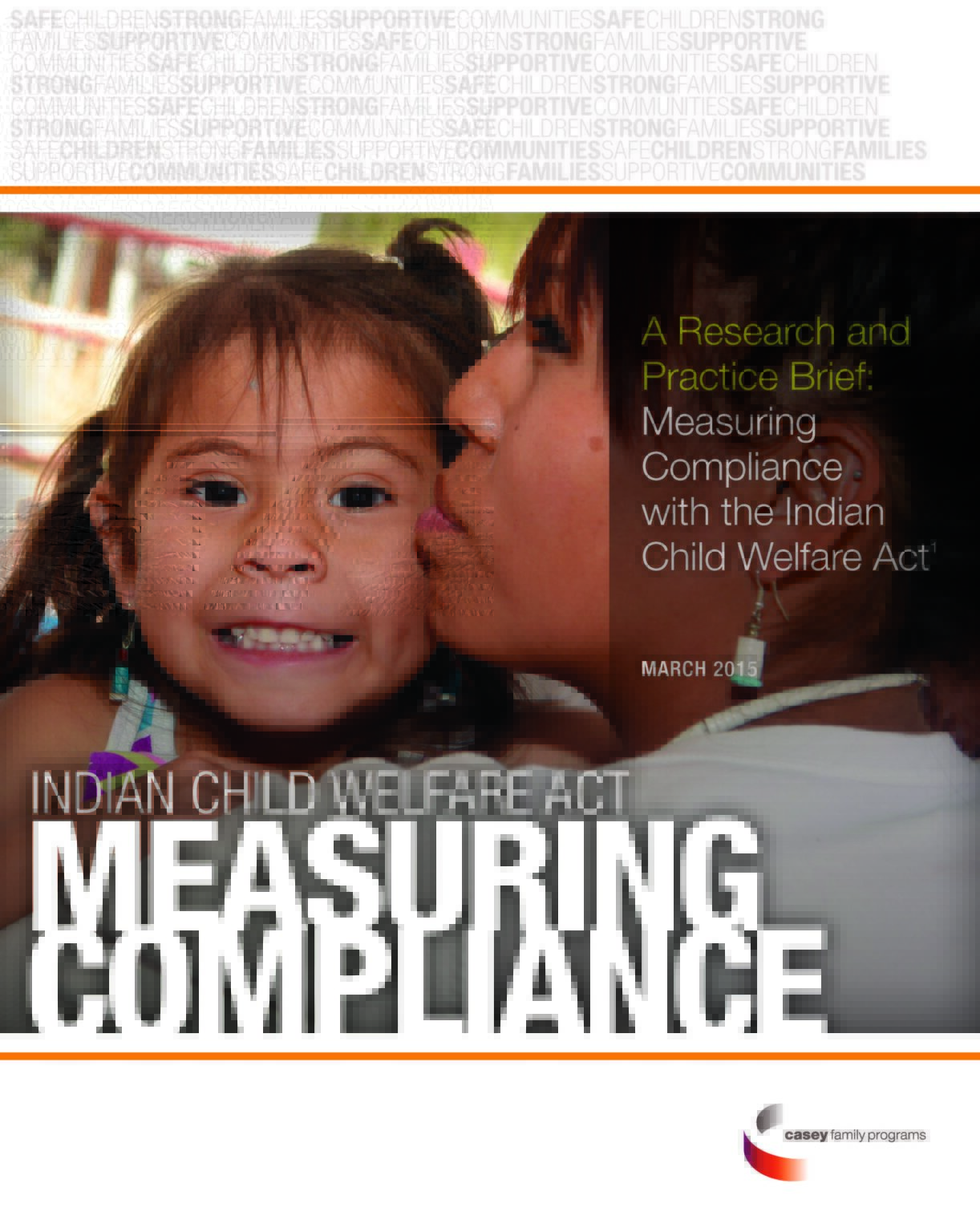
This research and practice brief by Casey Family Programs is a useful resource for states that seek to document compliance with ICWA. We document different approaches for measuring compliance and make some recommendations including increased resources to support and to develop training mechanisms for child protective services and judicial staff. Standard measures for compliance across jurisdictions would be beneficial.
Lea el informe completo
ICWA demands additional responsibilities for the public child welfare system and special oversight by the courts when Native American children are involved in the court system in order to promote the well-being of children and their families. To date, implementation of ICWA is inconsistent and compliance measurement relatively scarce.
PDF: 9.57 MB