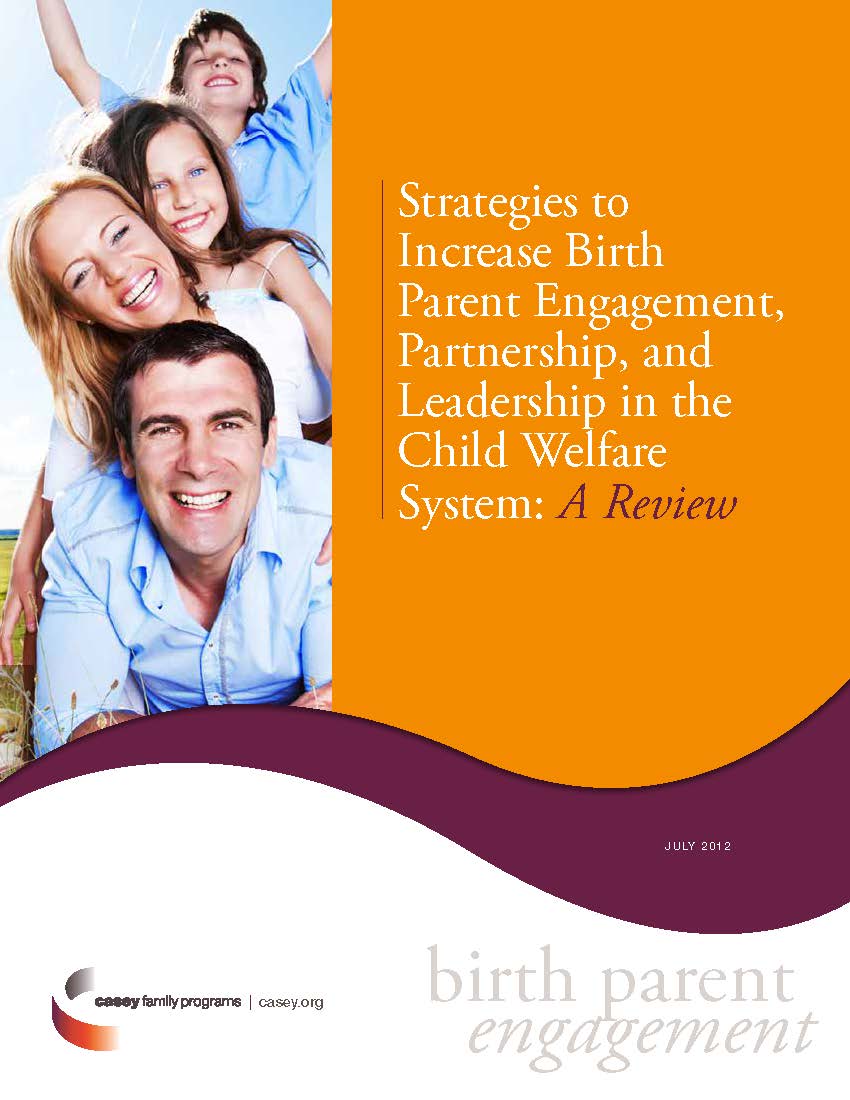
As an outgrowth of Casey’s ongoing work with birth parents, Research Services and Technical Assistance Unit collaborated to review strategies and programs that increase birth parent engagement with child welfare services and that develop effective child welfare partnerships with birth parents as mentors, leaders and advisers. To learn more read the executive summary or the full report.
Strategies to Increase Birth Parent Engagement
Related posts
-
 Promote a shared responsibility for building Communities of Hope
How was Safety Organized Practice implemented in San Diego County?
-
 Promote a shared responsibility for building Communities of Hope
What are some evidence-based interventions to prevent and mitigate the effects of prenatal substance exposure?
-
 Promote a shared responsibility for building Communities of Hope
How does New York City provide voluntary services?
-
 Partnering
How does the state of Washington provide voluntary services?
-
 Promote a shared responsibility for building Communities of Hope
How can Plans of Safe Care help infants and families affected by substance abuse?
-
 Promote a shared responsibility for building Communities of Hope
How do Tribal health, Medicaid, and child welfare systems interact?
-
 Promote a shared responsibility for building Communities of Hope
What are examples of Tribal behavioral health and traditional healing programs?
-
 Promote a shared responsibility for building Communities of Hope
How can Tribal health, Medicaid, and child welfare partner to support traditional healing and behavioral health services?
-
 Promote a shared responsibility for building Communities of Hope
Why should child protection agencies and faith-based organizations partner to support children and families?
-
 Promote a shared responsibility for building Communities of Hope
How can child protection agencies and faith-based organizations work together to meet family needs?