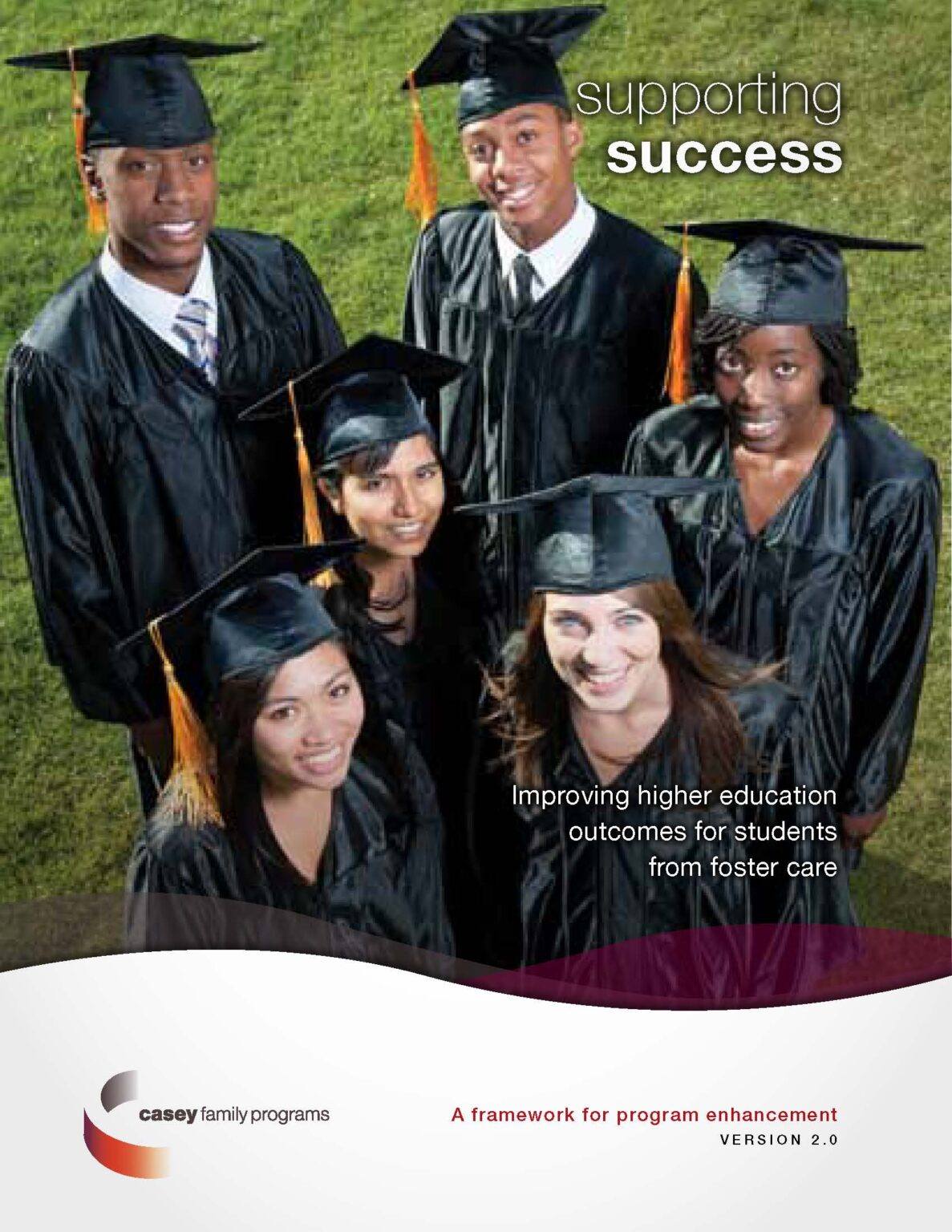
College provides an opportunity for young people to secure good jobs, advance in their careers, achieve economic independence and build important social networks. For youth from foster care, college can mean freedom from their past and the ability to choose a future rich with possibilities.
Access to higher education and targeted college support services for youth from care remains limited
Too few students from foster care ever gain access to higher education programs, let alone graduate from college. About 7 percent to 13 percent of students from foster care enroll in higher education. Only about 2 percent obtain bachelor’s or advanced degrees, in contrast to 24 percent of adults in the general population.
Youth in foster care often report that few people in their lives ever expected them to attend and succeed in college. These students seldom receive the kind of guidance and stable support needed to succeed in postsecondary education or training. Too often, unemployment, underemployment and homelessness face young adults after they age out of foster care. College success can make a lifelong difference.
Colleges and universities can help youth succeed
Colleges, policymakers and advocates are increasing their attention to this issue with calls for policy advances, practice innovations, systems collaborations and targeted advocacy.
Supporting Success, now in its second edition, provides useful information for college counselors, student support services programs and TRIO programs. It provides professionals and advocates with a powerful tool for improving postsecondary education and training outcomes for students in and from foster care.
Updates in version 2.0
The latest edition of this popular publication reflects important practice and policy advances. Updates include:
- How the reauthorized Higher Education Opportunity Act (HEOA) and the Fostering Connections Act increase higher education opportunities for students from foster care
- New and updated profiles of outstanding support approaches at community and four-year colleges
- Information on how several state higher education and child welfare systems are working together to establish improved support services statewide
- A new guide for securing maximum financial aid for “independent” students who were in foster care or homeless
- Additional articles and resources
What education professionals say about Supporting Success
We are currently developing a program for students on our campus who have been in the foster care system. Supporting Success is providing a critical framework of recommendations and best practices for our implementation committee to follow. In addition, the document is presented in a very understandable format, making it accessible for all committee members. This is key. This guide is truly providing a road map for us.
The Supporting Success framework was a close companion in the development of the Seita Scholars program at Western Michigan University. The guide was helpful in setting realistic goals, prioritizing planning needs, and identifying clear tasks to develop an effective campus-based program of support for college students from foster care. I highly recommend it.
Supporting Success
This resource provides professionals and advocates with a powerful tool for improving postsecondary education and training outcomes.