Based on a peer support model, parent partner programs connect parents impacted by child welfare with a mentor who can offer them hope and support as they navigate the system. Ensuring that this lived expertise and support is available to every parent impacted by child welfare is one way for child protection agencies and their partners to engage parents and support families on the path to safety, permanency and well-being. This approach also allows child protection agencies to learn from parents who have experience with child welfare and then apply their expertise in meaningful ways to improve and, ultimately, transform child welfare.
Every parent should have access to a parent partner if they want one. Government and agencies can’t keep children safe simply by visiting a child for one hour a month. Parents need to feel heard, informed, empowered and supported to safely care for their children, and ultimately, that’s what parent partners are all about. Parent partners are not just a program — they help keep children safe in their families and communities.
What are parent partner programs
Parent partners are peer mentors who are available to support parents navigating the child welfare system. While program models vary, a core element is that parent partners can apply their lived experience to build trust with parents. They support them in meeting their goals, build bridges between parents, the agency and community, and offer hope for their own families.
Casey resources
The resources below provide additional general information about parent partner programs as well as specific models to illustrate the breadth of the approach and its impact.
Why are parent partner programs critical to supporting children and families impacted by the child welfare system?
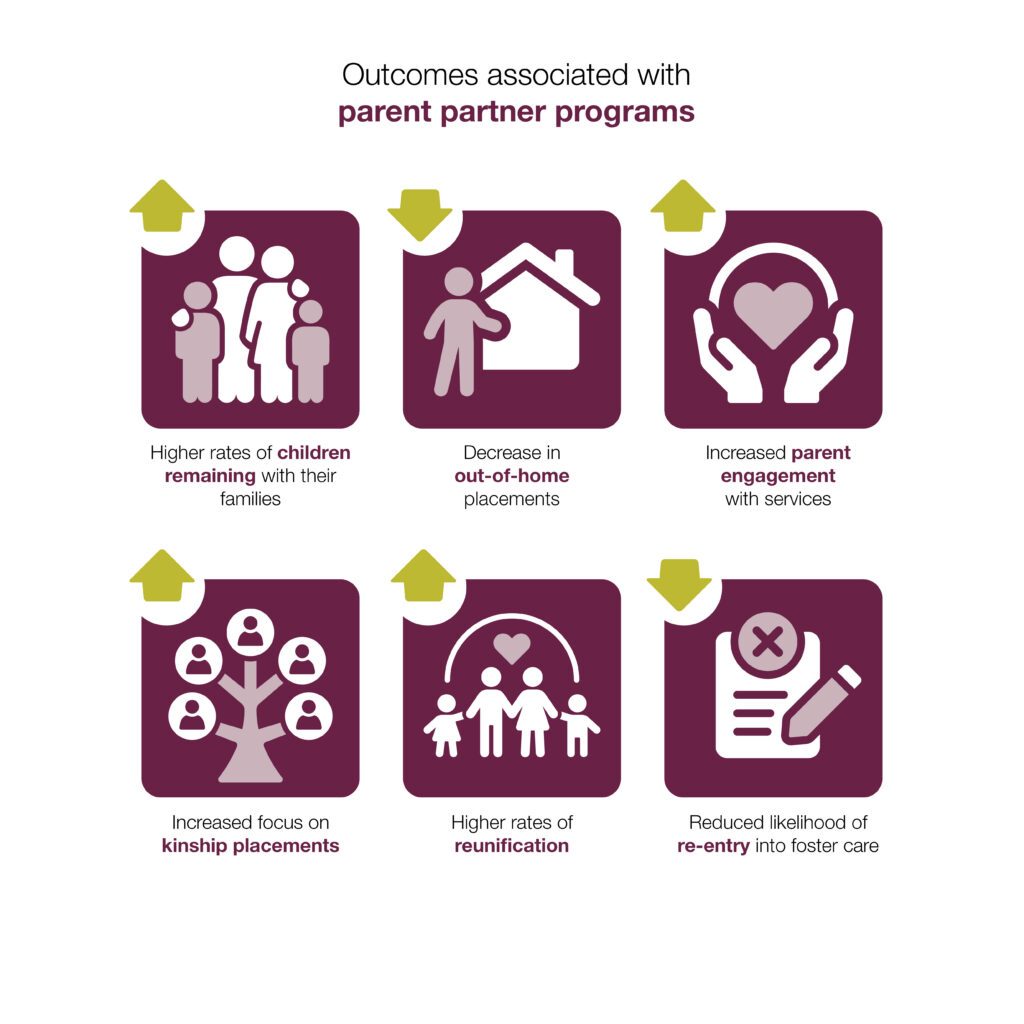
Parents often identify their parent partner as the most critical person in their experience with child welfare. Parent partners can understand and support them in a way that no one else on their team can. That shared experience is invaluable in engaging parents who might otherwise be distrustful of child welfare, leading to better outcomes for children and families.
Casey resources
The resources below provide additional general information about parent partner programs as well as specific models, to illustrate the breadth of the approach and its impact.
How are parent partner programs operationalized and sustained?
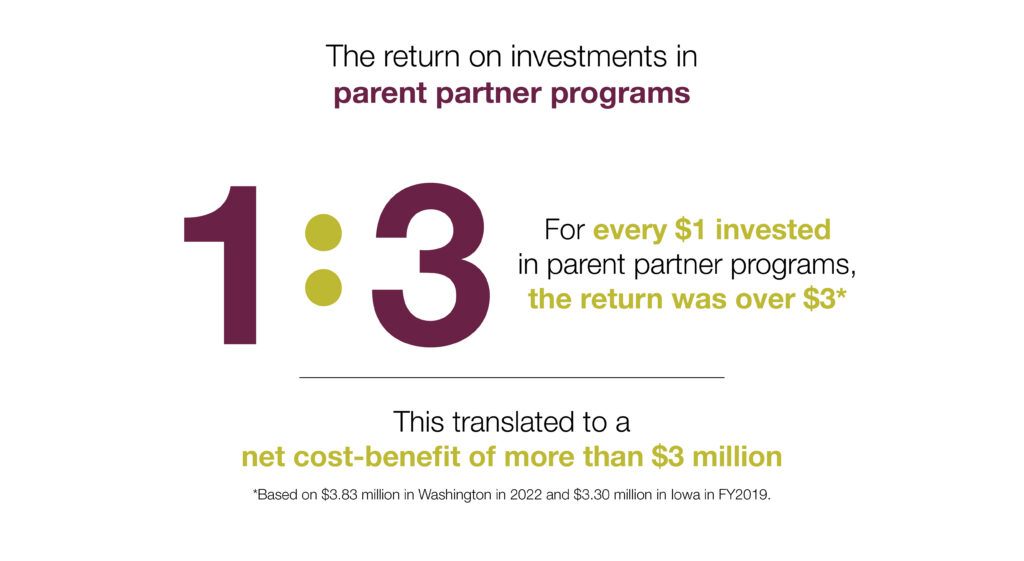
Parent partner program models can take several different forms, including as a family support model to prevent family separation. They can be implemented by different stakeholders, such as courts, the child protection agency or community partners. The key is to partner with families, community members and other lived experts from the beginning to understand what families need and, if necessary, start small. Even a small program can have a large impact on families.
Casey resources
The resources below offer considerations for implementing a parent partner program, including information about funding, training and sustaining parent partner programs. Programmatic examples from across the country are also shared.
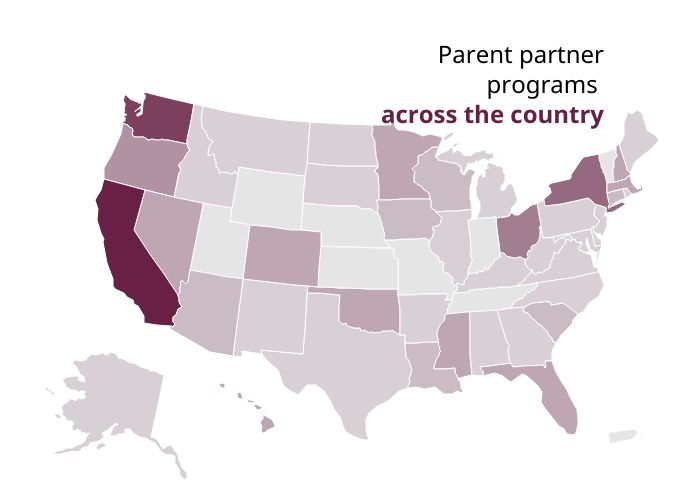
This interactive map shows the number of parent partner programs per state. For a detailed list or to add your program, view the directory below. This map is updated quarterly and may not be exhaustive.