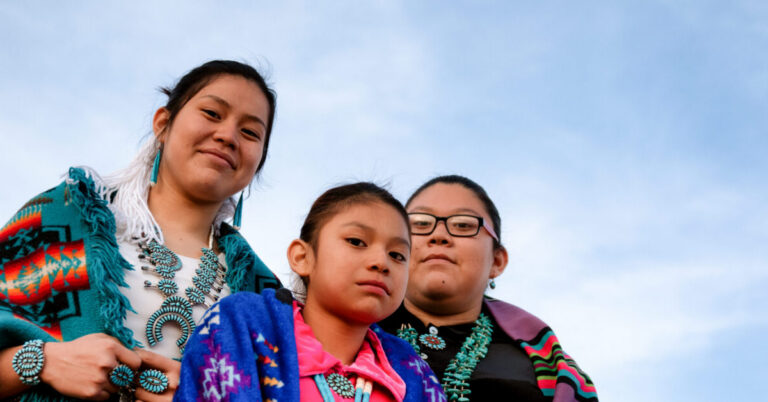
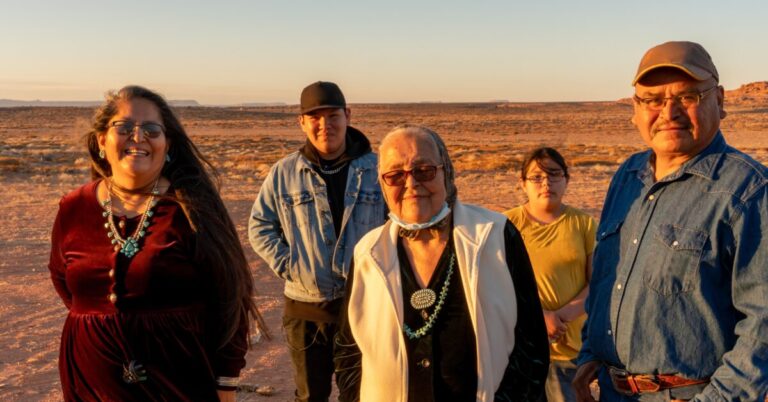
Nationwide, Native American children are disproportionately represented in the child welfare system, with foster care placements at a rate more than 2.5 times greater than their proportion in the general population. In at least a handful of states, this ratio is even higher.
For Native American children and families that have been separated, these numbers are not an abstraction. They speak to the risk of real — and often avoidable — harm from being drawn into a system that has inflicted historical trauma on generations of Native American communities. Once involved in the child welfare system, Native Americans too often find themselves the sole Indigenous people in case meetings and court hearings where consequential decisions about their families are being made. Even attorneys appointed to represent them and the best interests of their children may meet with families only minutes before a hearing and understand little about the context of their lives.
The program gives me a more comprehensive view of ICWA cases that I work on and makes it a lot easier for me to find and retain the best qualified witness for a case. This not only ensures I meet the legal criteria, it ensures I’m doing the right thing.
The Indian Child Welfare Act (ICWA) was passed in 1978 to address the history of separation of Native American families, and to protect children and families from further trauma. Adherence to ICWA at the state and county levels is not just the law, it is the right thing to do. In North Dakota, the ICWA Family Preservation Program supports accurate implementation of ICWA and helps Native American families preserve family, community, and cultural ties. The program honors the spirit and letter of ICWA by prioritizing family unity and Tribal sovereignty in child welfare decision-making.1
An evaluation focused on 485 families that have received program services since 2020 documented several promising outcomes:2
- Decreased time in foster care. The average time in foster care for a child receiving ICWA Family Preservation Program services was 4.4 months. Statewide in 2020, the median length of stay for American Indian/Alaska Native (AI/AN) children who entered foster care was 403 days (more than 13 months).
- Fewer terminations of parental rights (TPR). TPR occurred in 6% of program cases, compared to 25% of cases involving AI/AN children in North Dakota who entered the system in 2020.
- Safety was preserved. The number of children re-entering the child welfare system did not increase: 7% for families participating in the program, which was no more than the statewide number in 2020.3,4
To learn more about adherence to ICWA principles, see: What lessons can we learn from ICWA courts?
Family ties are restored
As soon as Karla’s daughter lost parental rights to care for her son, Karla let her county child protection agency know that she wanted to care for her grandson. The agency, however, seemed unwilling to consider her as a placement option. Karla felt like her pleas were falling on deaf ears. After seeing her grandchild experience eight different foster homes, she became discouraged and considered giving up. As a last resort, she reached out to her Tribe, which connected her to Bobbie Kastner, an ICWA family preservationist based in the county where her grandson lived. According to Karla, that phone call changed the course of their family’s life.
Bobbie and Karla spoke regularly on the phone, and despite living several hours apart, met in person when they could. Whereas Karla felt like the county caseworker saw her through a lens clouded by bias and stereotypes, “I feel like Bobbie really got to know me,” she says. Bobbie provided the Tribe’s ICWA representative with a new perspective on Karla’s family — one informed by Tribal context, shared identity, and trust. That’s when things began to change. When Bobbie informed the ICWA representative that the county was not following through on mandates under ICWA, the representative began advocating with the county for placement with Karla.
Today, Karla’s grandson has a safe and stable home with his grandmother. Bobbie referred Karla to community services that helped make their two-bedroom apartment more secure and comfortable, and helped her clear back rent that was past due. “Working with Bobbie, I felt like I had someone who could understand me, understand our people,” Karla says. “She’s the only reason I got my grandson back.”
There’s such power in a family knowing we showed up for them. It’s a different kind of support. It’s about having support from someone who looks and sounds like you and wants to know how you’re doing.
What does an ICWA family preservationist do?
An ICWA family preservationist (IFP) supports families during court hearings, family team meetings, and visits with children. They educate parents on processes and therefore help them become more actively engaged in case planning and decision-making. IFPs also may connect families to cultural resources that can support family reunification. If the state or county requests, and the Tribe supports it, an IFP may even become part of a family’s safety plan, designated as someone the family can contact for assistance. “But we aren’t case managers,” lead IFP Leah McCloud explains. “That’s the state or county’s responsibility.”
An IFP is assigned at a Tribe’s request as soon as the Tribe is given notice of “reason to know” that a child in the child welfare system may be an enrolled member or eligible for enrollment. Unlike ICWA representatives who work for a Tribe and juggle up to 200 cases at once, IFPs typically work with 25 families at a time and therefore have more time and flexibility to get to know families and their circumstances, hear their stories, and connect them to resources. Their job entails:
- Outreach to all parties. An IFP begins engaging families by providing information about the program, their rights under ICWA, local services, healing practices, and traditional medicines. The IFP is encouraged to set aside active or past case files, which may contain biased information, until after hearing a family’s story directly. After meeting with a family, the IFP reaches out to the county caseworker to learn about the child protection agency’s plan, and briefs a Tribal representative to provide information about the status of the family and the case with an Indigenous lens.
- Provide relational support. Building trust and connection with a family is an important part of the IFP’s job. “A lot of our native families have a mistrust with CPS because of historical trauma or personal experience,” says Michelle Harrison, ICWA director for the Standing Rock Sioux Tribe. “The IFPs are able to build trust with these families, get them to open up and engage.”
- Monitor active efforts. Another important aspect of the IFP role is to inform the Tribe and county court about whether the state has provided active efforts to preserve or reunify the family, as required under ICWA.
- Support Tribal placement preferences. IFPs often augment efforts to search for family members who could be placement resources if needed. “IFPs are boots on the ground, helping us look for relatives,” Harrison says. “In doing so, they’re helping us follow the ICWA placement preferences and honoring our sovereignty, ensuring cultural connections remain in place.”
- Offer expert testimony. If a Tribe approves, IFPs provide qualified expert witness testimony during removal and TPR hearings, in accordance with ICWA. They testify specifically to the individual family’s circumstances and the prevailing social and cultural standards of the Indian child’s Tribe. Some Tribes opt to have only enrolled members serve as expert witnesses, while others consent to an IFP enrolled in a different Tribe to serve in that role. In either case, the IFP provides context rather than recommending particular outcomes.
Our ICWA Family Preservationists are essential. Their first-hand knowledge, cultural perspective, and dedication to our native families help ensure every child and family is served with respect, compassion and cultural understanding.
How did the IFP program begin and grow?
The ICWA Family Preservation Program in North Dakota was initiated with a federal ICWA Implementation Partnership Grant, which trained state and county child welfare workers to work with Native American families and created a program to recruit and train qualified expert witnesses. Harmony Bercier, a member of the Turtle Mountain Band of Chippewa, was hired by the University of North Dakota to work on the first task, and Jessi Leneaugh, a member of the Rosebud Sioux Tribe, was tapped for the second.
Bercier and Leneaugh soon identified barriers that the grant alone could not address: 1) Tribal ICWA offices were woefully under-resourced and under-staffed; 2) county caseworkers sometimes had difficulty engaging Native American families and carrying out mandated ICWA practice in a timely fashion; and 3) expert witnesses, whose time and expertise often were not compensated, were being brought in at the end of cases and therefore did not always have time to get to know the families well.
Leneaugh and Bercier therefore envisioned a paid position for someone who would understand each case deeply — from a Tribal perspective — and support the family accordingly, similar to a guardian ad litem. They reasoned that by walking the life of the case alongside the family, these advisors could provide higher quality, better informed expert testimony while also helping families understand, engage, and navigate the child welfare system.
ICWA representatives from four North Dakota Tribes worked with Leneaugh and Bercier to develop all aspects of the program. However, it took time to convince their own grant Principal Investigators to share power with their Native American colleagues and advisors. After two years of planning and advocacy, and with allyship from non-native colleagues, the pilot launched in two counties in 2020. The program expanded steadily across more counties and became statewide in November 2025. Representatives from each county meet monthly to address challenges. “We didn’t want to encounter roadblocks in every county independently,” Bercier says: “We learn from each other.”
Today, Leneaugh directs the ICWA Family Preservation Program under the auspices of the Native American Training Institute in North Dakota.
Relationships are everything
When Leneaugh and Bercier approached Grand Forks County about piloting the ICWA Family Preservation Program there, 49% of the county’s children in foster care were Native American — an alarming rate given that only 3% of the county’s general population is Native American. “We were used to being the only experts,” recalls Traci Van Beek, program administrator for Grand Forks County Children and Family Services. “It was very uncomfortable to realize there were significant areas where we needed to improve.”
Overcoming that discomfort and developing an effective partnership required a lot of trust. “We quickly learned relationship was everything,” she says. Van Beek spent months with the program developers prior to launch. County child welfare staff went through a series of trainings, which included videos on the spirit of ICWA, personal coaching, and a curriculum Bercier developed about bias.
Recognizing that her staff needed to get out of their comfort zone, Van Beek sought to create an environment where that was the norm. “We had to ask each other difficult questions about our practice, hold each other accountable, unwrap why we were feeling defensive,” she says. “We had to acknowledge our biases and choose relationships over pride and ego.”
Since program implementation, the rate of children in foster care in Grand Forks County has dropped to 17% — a massive win with, as Van Beek acknowledges, still room to grow. The population of all children in care has also been reduced by more than 70 percent since the program began. She says she now talks about the program “as ‘us’ and not ‘us vs them.’ The moment we shifted from trying to be the expert to being a partner, that’s when our outcomes improved.”
We guide our work with intent, impact, and commitment, and we stay committed to taking the time and space to honor impact — whether good, bad, or ugly. Having those difficult conversations has helped us grow together instead of growing apart.
Lessons learned
Today, the ICWA Family Preservation Program is funded by the North Dakota Department of Health and Human Services, embedded in state agency policy, and there is greater clarity across partners about the program’s purpose, approach, roles and strategies. But getting to this point took significant time and effort. Lessons learned include:
- Build widespread support for the program to ensure sustainability. Fostering relationships with a broad base of champions within the state, counties, and Tribes is key to overcoming funding challenges when political or executive leadership turns over. Create champions by finding alignment between program objectives and state and county child welfare system practice goals, such as emphasis on family engagement, community partnership, and cultural competencies. “This isn’t silo work,” Leneaugh says. “The more people who know what you’re up to, the better.”
- Focus on the why to build commitment. Adding a new person to a case to ensure ICWA compliance can feel like criticism to state or county caseworkers who feel they already are doing their best for families. Explain to caseworkers how an IFP helps support agency goals. “Implementing the program out of compliance is not going to be enough,” Van Beek says. “You have to bring heart to it.”
- Address bias. Conscious or not, cultural bias about Native American families plays a role in their disproportionate representation in and disparate treatment by child welfare systems. Cultural training of system staff is ongoing, not one and done. Even with training, Bercier says, “not everyone is cut out to serve Indian families.” Burleigh County Assistant State’s Attorney Mary Melech says the continual education is one of the most beneficial aspects of the program. “I have learned so much about our regional Tribes’ practices and cultures, and I think that helps me be a better attorney and advocate for the state,” she says. “I think our judicial officers have become more culturally aware, as well.”
- Select IFPs on cultural fit and their ability to communicate effectively. Each IFP in North Dakota is a Tribal member with experience living on reservations or visiting families there. IFPs should be effective communicators, serving as a liaison between parties in an ICWA case — helping agency and court representatives better understand families and explaining child welfare proceedings to family members in Tribal-friendly language. “I think our families engage better with the IFPs because IFPs can understand their lives better than someone who doesn’t come from the reservation, doesn’t know the history, and doesn’t understand the cultural realities of our community,” Harrison says.
- Train for knowledge. Most new IFPs have not had a background in the child welfare system, or even social work. As a result, their training is extensive and includes education on ICWA and Motivational Interviewing. Each new IFP also completes three to four months of shadowing, coaching, and mentoring before taking on cases alone. The only way to truly understand the complexities of ICWA cases is by working them, IFP McCloud says. “Learning about ICWA in school is not the same.”
- Welcome different perspectives. To assist in ICWA cases, IFPs need to solicit and correlate information from multiple sources that bring different experiences and perspectives and operate within different constraints: families, public child protection agencies, Tribes, and courts. Valuing and welcoming those varying perspectives is critical.
- Manage conflicts with respect. To build and maintain positive relationships between partners, tensions that occasionally arise between individual IFPs and agency caseworkers are managed at the supervisory level or higher. After program leaders discuss the issue, they trust each organization to determine how best to communicate new understandings and any procedural changes to their own staff. This helps create trust and is an effective pathway for increasing understanding more broadly among frontline agency staff.
- Treat Tribal sovereignty as paramount. Each participating Tribe has a formal memorandum of understanding with the program. Amplifying Tribal voice in child welfare proceedings and decisions made about their children and families is a shared vision among all tribes, but the specific ways IFP involvement can support that common goal should reflect — and respect — each Tribe’s own needs, values, and sovereignty.
Whenever we meet with a family it’s like we’re meeting with relatives. They might have a problem they’re working on at the moment, but that doesn’t mean they are a problem. We try to keep an open mind and open heart with our families who are struggling.
What the future holds
With sustainability in mind, the program established a pathway for federal Title IV-E reimbursement if state funding ever lags. A fidelity assessment anchored by a theory of change is now underway to document program effectiveness for inclusion in the Title IV-E Prevention Services Clearinghouse.
The Native American Training Institute in North Dakota provided essential infrastructure to power the program’s success, including administration support and monthly trainings open to anyone interested in learning more. As program director, Leneaugh is working to expand the program through MOUs with Tribes in neighboring states. She says she would like all states to have the infrastructure to ensure compliance with ICWA and for all Tribes to have access to local support anywhere an enrolled member is involved with a state or county child welfare system.
“A nation of IFPs would be a dream come true,” she says, adding that her team is willing to share its forms, job descriptions, and even the full program design. “If anything speaks to you, we want to give it to you.”
Casey Family Programs consults with individuals and teams across the country to compile research, experiences, and insights about approaches that can safely reduce the need for foster care and ensure the well-being of children and families. We share this information broadly to help child welfare leaders and their partners tackle similar issues in their own communities. For questions about this resource, or if you have other child welfare information needs, please email kmresources@casey.org.
1 This brief was informed by interviews with Harmony Bercier, Grant Manager, North Dakota ICWA Implementation Partnership, University of North Dakota; Jessi Leneaugh, ICWA Family Preservation Program Director, Native American Training Institute, North Dakota; Michelle Harrison, ICWA Director, Standing Rock Sioux Tribe; Leah McCloud, Lead ICWA Family Preservationist, Native American Training Institute, North Dakota; Mary Melech, Assistant State’s Attorney, Burleigh County, N.D.; Traci Van Beek, Children and Family Services Program Administrator, Grand Forks County, N.D.; and Karla, a grandparent who received support from the ICWA Family Preservation Program, whose last name is withheld for privacy purposes. ↩︎
2 Data analysis conducted by Native American Training Institute (North Dakota) and the University of North Dakota as part of a program evaluation. Not yet published, the findings were shared with Casey Family Programs via Harmony Bercier in July 2026. ↩︎
3 U.S. Department of Health and Human Services, Administration for Children and Families, Children’s Bureau. Available from the National Data Archive on Child Abuse and Neglect, AFCARS Dataset. The receiver of the original data (the Archive, Cornell University) bears no responsibility for the analyses or interpretations presented here. ↩︎
4 Comparison data based on the Child and Family Services Reviews (CFSR) Round 4 definition of children re-entering foster care. ↩︎